Refpo Article
Best Zero-Balance Digital Savings Accounts for Students in India (2026)
Last Updated: October 15, 2026
Category: Banking, Personal Finance, Student Benefits
Target Audience: Students, young professionals, first-time account holders, and digital banking users in India
Opening a savings account as a student can be challenging. Many students want an account with no minimum balance requirement, low charges, convenient online account opening, a good mobile banking application, and compatibility with investment platforms.
Several Indian banks offer digital savings accounts and student-oriented banking options. However, a zero-balance account is not necessarily a zero-charge account. Debit card fees, account maintenance charges, fund-transfer fees, and eligibility conditions can still apply.
In this guide, we compare student-friendly savings accounts, discuss their eligibility requirements, and explain which banks may be useful if you also invest in US stocks through Indian investment platforms.
Important: Account features, eligibility, minimum balance requirements, and digital onboarding policies can change. Always confirm the latest terms on the bank's official website before applying.
1. IDFC FIRST Bank Quantum+ Savings Account
Best for: Students who want digital banking alongside investment-related services.
IDFC FIRST Bank offers digital banking facilities and multiple savings-account variants. The Quantum+ product may appeal to applicants looking for a modern banking experience, but the exact account terms should be checked before applying.
Features to Check
- Minimum balance requirement.
- Initial funding requirement, if any.
- Debit card issuance and annual fees.
- Online account-opening eligibility.
- Mobile banking and UPI facilities.
- NEFT, RTGS, and IMPS charges, where applicable.
- Compatibility with investment platforms.
Why Students May Consider It
A student who plans to use a savings account for everyday payments, online purchases, UPI transactions, and investment-related transfers may benefit from a bank with comprehensive digital services.
However, do not assume that every Quantum+ applicant automatically qualifies for zero-balance banking or that opening an associated fixed deposit guarantees approval for a savings account or credit card.
Official website: https://www.idfcfirstbank.com/
Before applying: Confirm the current Quantum+ Savings Account minimum balance, opening requirements, and schedule of charges directly with IDFC FIRST Bank.
2. Bank of Baroda bob BRO Savings Account
Best for: Students looking for a student-oriented banking option from a public-sector bank.
Bank of Baroda offers savings products for different customer categories. Students should check whether the bob BRO product currently meets their age, educational, and account-opening requirements.
Features to Check
- Minimum balance requirement.
- Eligibility based on age and student status.
- Online versus branch-based opening.
- Debit card availability and annual fees.
- UPI and mobile banking facilities.
- Charges for transfers and other services.
Why Students May Consider It
Bank of Baroda may be worth comparing if you prefer a public-sector bank or already maintain a banking relationship with the bank.
Before opening the account, check whether the specific student product can be opened digitally and whether it requires student identification or other supporting documents.
Official website: https://www.bankofbaroda.in/
Important: Do not confuse a student account's eligibility benefits with a universal zero-balance guarantee. Check the terms of the exact account variant.
3. Canara Bank Student Savings Account
Best for: Students who prefer a public-sector bank and want to investigate student-specific banking benefits.

Canara Bank provides savings products for different customer categories, including students and young customers. The minimum balance requirement and digital-opening process depend on the specific product.
Features to Check
- Exact name of the student savings account.
- Whether the account has a zero minimum balance requirement.
- Whether the account can be opened online.
- Age and student-status requirements.
- Debit card issuance and renewal charges.
- Mobile banking and UPI availability.
Why Students May Consider It
Students who already have access to a nearby Canara Bank branch may find it convenient to explore its student-oriented account options.
However, if your priority is completely online account opening, verify the onboarding process before beginning an application.
Official website: https://canarabank.com/
Tip: Ask the bank to confirm the account's minimum balance requirement in writing if zero-balance banking is your primary objective.
4. Federal Bank Yuvamitra
Best for: Young customers who qualify for Federal Bank's student-focused offering.

Federal Bank has offered youth-oriented banking products, including Yuvamitra. Eligibility, benefits, and application procedures should be confirmed against the bank's current product information.
Features to Check
- Current age eligibility.
- Whether proof of student status is required.
- Minimum balance requirement.
- Digital account-opening availability.
- Debit card and annual maintenance charges.
- Mobile banking and UPI facilities.
Why Students May Consider It
A youth-oriented account may offer features relevant to college students and young adults. Nevertheless, the availability of a student-focused product does not automatically mean that every applicant can open it online or that all associated services are free.
Official website: https://www.federalbank.co.in/
Before applying: Verify whether Yuvamitra is currently accepting new applications and whether your age and educational status meet the eligibility criteria.
5. Punjab National Bank PNB RISE
Best for: Eligible young customers who want to explore PNB's youth-focused banking options.
Punjab National Bank offers savings-account products for different customer segments. PNB RISE is an option to investigate if you meet the current eligibility requirements.
Features to Check
- Minimum balance requirement.
- Current age eligibility.
- Whether student status is required.
- Online application availability.
- Debit card and service charges.
- PNB ONE mobile banking access.
- Requirements for full KYC.
Why Students May Consider It
PNB may be worth considering if you prefer a public-sector bank or already use PNB's digital banking services.
However, the exact benefits depend on the account variant. Do not assume that all PNB youth or student accounts share identical minimum balance requirements.
Official website: https://www.pnbindia.in/
Practical advice: Before opening a new account, check whether an existing PNB savings account can meet your needs with fewer charges.
6. AU Small Finance Bank AU Digital Savings Account
Best for: Eligible applicants who want to explore digital account opening with a small finance bank.
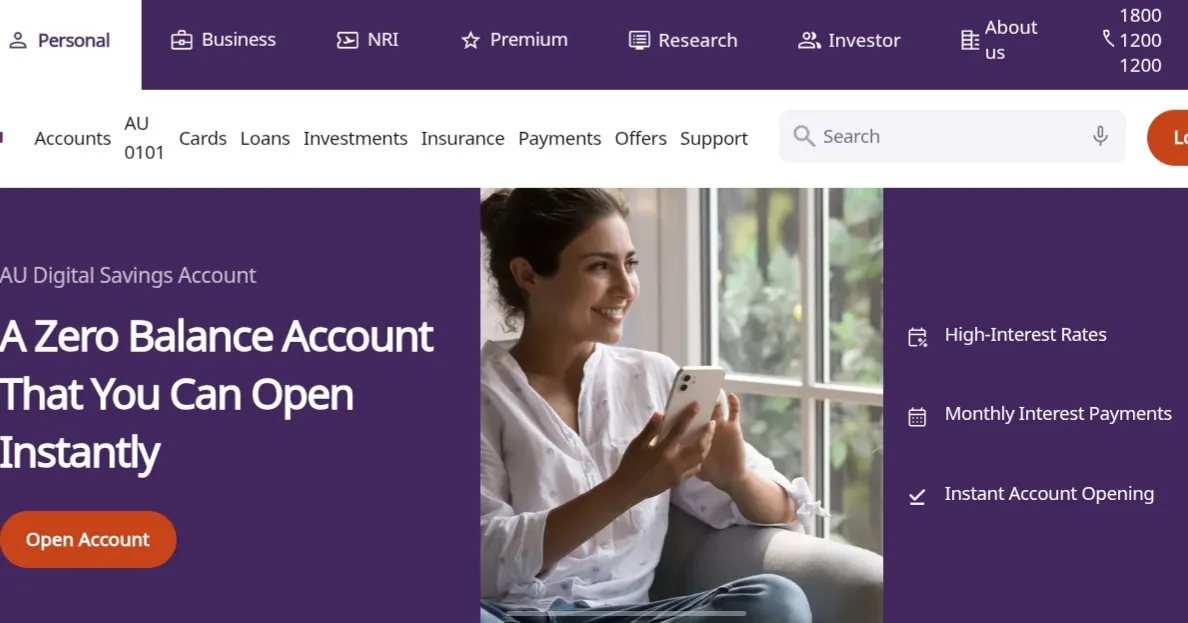
AU Small Finance Bank offers digital savings-account options. Certain offerings may advertise zero-balance banking, but customers should verify the applicable account variant and its current terms.
Features to Check
- Minimum balance requirement.
- Initial funding requirements.
- Eligibility for online account opening.
- Video KYC availability.
- Debit card charges.
- UPI and mobile banking features.
- Transaction and service charges.
Why Students May Consider It
A digital account can be convenient if you want to complete most banking activities through a mobile application.
However, digital onboarding can depend on KYC verification, applicant eligibility, and the bank's current policies.
Official website: https://www.aubank.in/
Remember: A zero minimum balance requirement does not automatically eliminate debit card fees or other service charges.
7. Kotak Mahindra Bank Kotak 811
Best for: Students looking for a digital-first savings account.
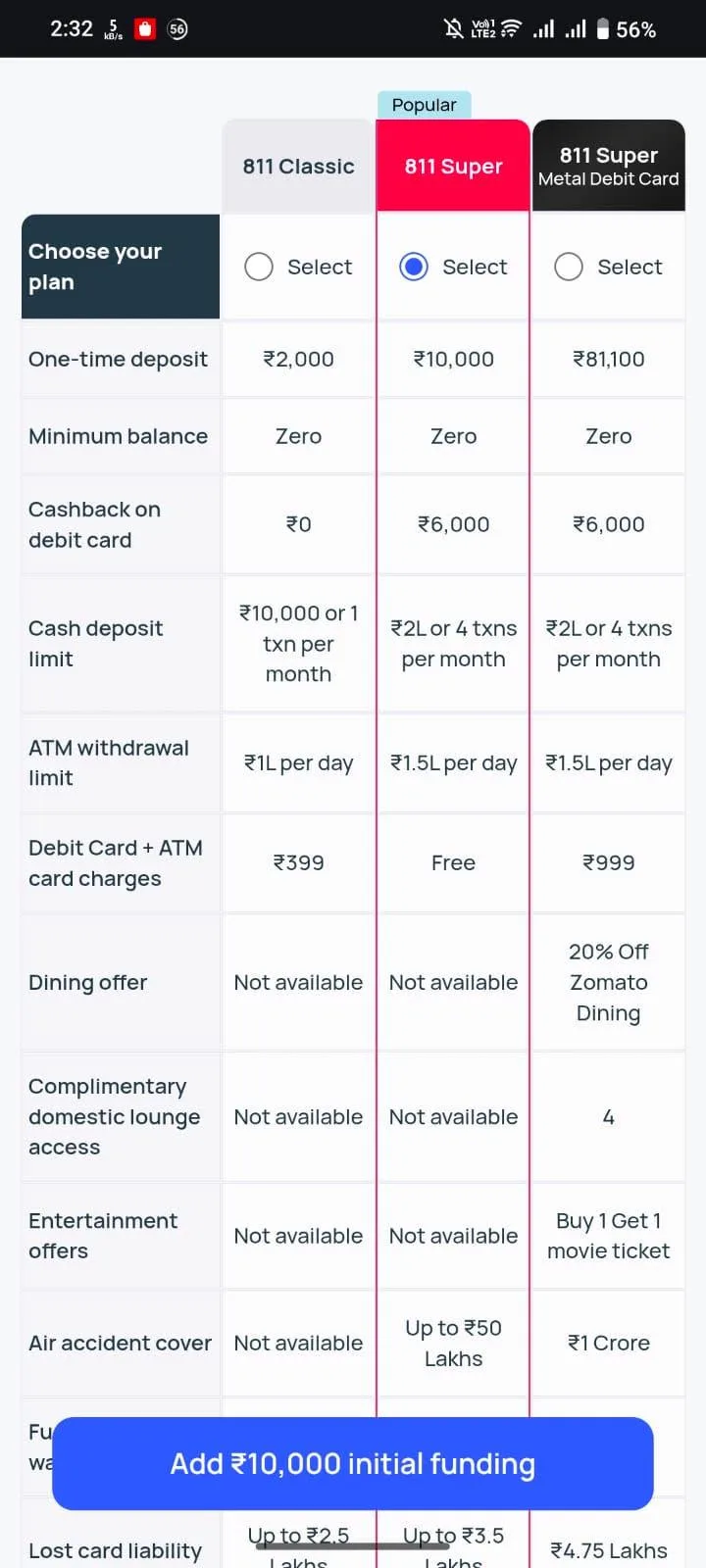
Kotak 811 is known for its digital account-opening approach. Its precise features and charges depend on the applicable variant and the customer's KYC status.
Features to Check
- Minimum balance requirement for your selected variant.
- Full KYC requirements.
- Debit card issuance and annual fees.
- Account-opening eligibility.
- UPI and mobile banking availability.
- Charges for specific banking services.
Why Students May Consider It
A digital-first account can be useful for students who want to manage payments, receive money, and access banking services through a mobile application.
Nevertheless, check the current terms rather than assuming that every Kotak 811 variant includes the same features or charges.
Official website: https://www.kotak.com/
Important: Account-opening approval and eligibility depend on the bank's current rules and verification process.
8. Axis Bank AMAZE Savings Account
Best for: Applicants who prefer digital banking and are comfortable reviewing a plan-based fee structure.
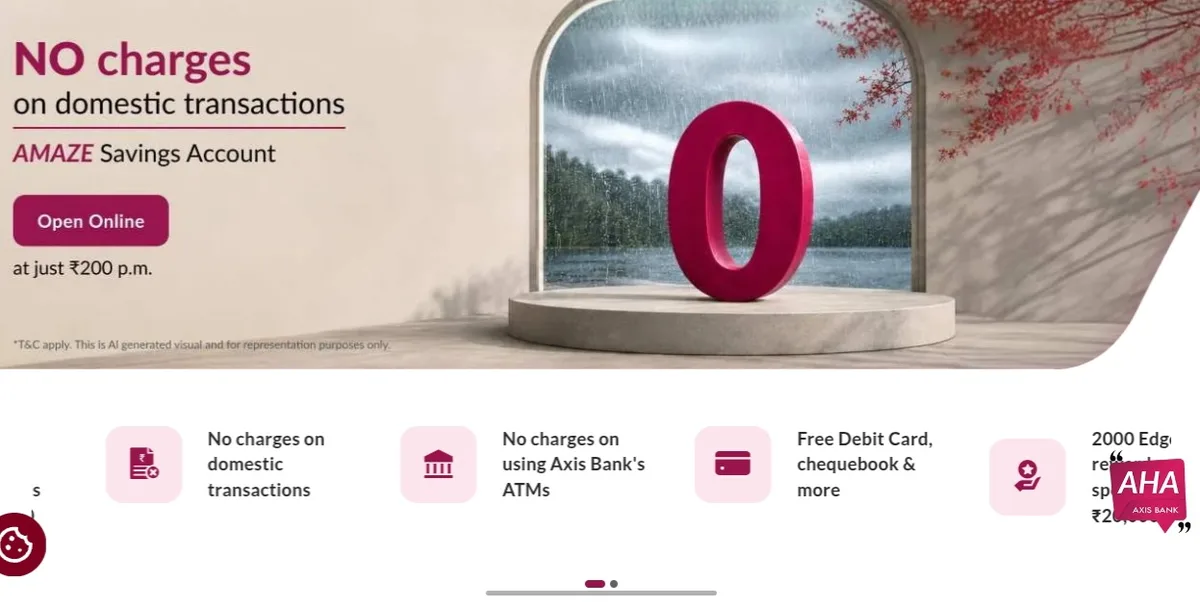
Axis Bank's AMAZE offering has been marketed around a different pricing structure from traditional minimum-balance-based accounts. Customers should verify the current plan and charges before applying.
Features to Check
- Whether the selected plan has a minimum balance requirement.
- Subscription or plan charges.
- Debit card fees.
- Free transaction limits.
- Account-opening eligibility.
- Mobile banking and UPI facilities.
Why Students May Consider It
The account may be worth investigating if you prefer digital services and want to understand the cost of banking in advance.
However, no minimum balance does not necessarily mean no recurring fee. A plan-based account can have charges even when no minimum balance must be maintained.
Official website: https://www.axisbank.com/
Student tip: Calculate the annual cost of the plan and debit card before comparing this account with zero-maintenance alternatives.
9. Other Axis Bank Digital Savings Accounts
Axis Bank offers multiple savings-account variants, and their minimum balance requirements can differ.
If you are considering an Axis Bank digital savings account other than AMAZE, verify the exact product name before applying.
Compare These Details
- Minimum average balance or other balance requirements.
- Monthly or annual service charges.
- Debit card fees.
- Digital onboarding availability.
- Eligibility based on age and KYC status.
- Charges for domestic transfers.
Official website: https://www.axisbank.com/
Important: Do not treat all Axis Bank savings accounts as zero-balance accounts. The terms of one variant may not apply to another.
What Does Zero-Balance Savings Account Actually Mean?
A zero-balance savings account generally means that the customer is not required to maintain a specified minimum balance to avoid a minimum-balance penalty.
It does not necessarily mean that every banking service is free.
For example, an account may have:
- No minimum balance requirement.
- A debit card issuance or annual fee.
- Charges for certain services.
- Limits on free transactions.
- Eligibility requirements for digital opening.
- Additional conditions for premium features.
Before applying, check the bank's official schedule of charges and the terms applicable to your account.
Zero Balance vs. Zero Charges
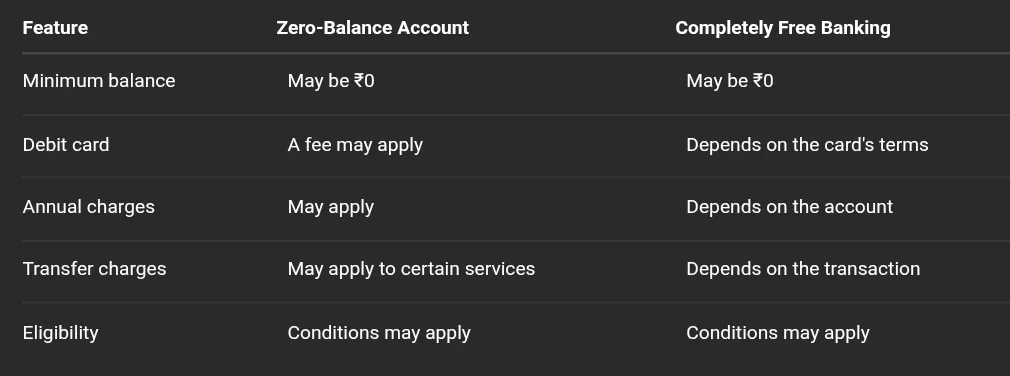
The best account for a student is not necessarily the one with the most features. It is the one that meets your requirements at the lowest realistic cost.
Banks Partnered with Indian Investment Apps for US Stock Investing
Some students want a savings account not only for everyday banking but also for funding investments in US stocks.
Indian residents can access US-stock investment services through eligible investment platforms, subject to applicable regulations, KYC requirements, funding arrangements, and tax obligations.
The bank you use may affect how conveniently you can fund an investment account. However, the cheapest option depends on the specific platform, transfer method, fees, and applicable foreign-exchange costs.
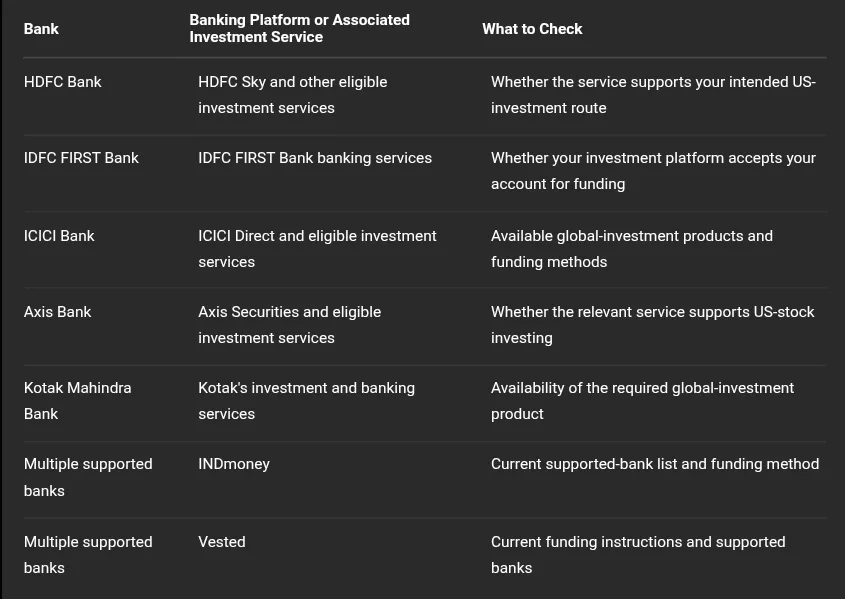
Important distinction: A bank's domestic investment or brokerage platform does not automatically provide access to US stocks. Verify the exact global-investment service available to Indian residents.
1. HDFC Bank and US Stock Investing
HDFC Bank customers may consider HDFC's investment services and other platforms that support HDFC Bank accounts.
However, the availability of US-stock investing depends on the particular platform and product.
What to Check
- Whether your chosen investment platform supports HDFC Bank.
- Whether funds are transferred domestically or through an overseas remittance arrangement.
- Whether additional forex or remittance charges apply.
- Whether the platform provides the documents required for tax reporting.
- Whether the bank account must be in the same name as the investment account.
HDFC Bank may be worth comparing if you already have an account or want to use its banking services for other financial activities.
Official websites:
- HDFC Bank: https://www.hdfcbank.com/
- HDFC Sky: https://hdfcsky.com/
2. IDFC FIRST Bank and US Stock Investing
IDFC FIRST Bank can be considered as a banking option for customers who use investment platforms that accept its savings accounts.
However, the bank's relationship with a particular investment platform should not be assumed without checking the platform's current funding instructions.
What to Check
- Whether your chosen investment app accepts IDFC FIRST Bank.
- Whether your account can be used for the required funding method.
- Transfer charges and transaction limits.
- Foreign-exchange and remittance costs, where applicable.
- Whether the account's minimum balance and service charges meet your needs.
If you already use IDFC FIRST Bank, confirm the supported funding method before opening another savings account solely for investing.
Official website: https://www.idfcfirstbank.com/
3. ICICI Bank and US Stock Investing
ICICI Bank customers may explore the bank's investment services and independent platforms that support ICICI Bank accounts.
ICICI Direct and other investment services should be evaluated according to the particular market and product you want to access.
What to Check
- Whether the chosen service supports US stocks for Indian residents.
- Whether your ICICI Bank account can fund that service.
- Applicable remittance and currency-conversion fees.
- Brokerage, platform, and withdrawal charges.
- Availability of investment statements and transaction records.
Do not assume that an ordinary domestic brokerage account automatically supports US-stock investing.
Official websites:
- ICICI Bank: https://www.icicibank.com/
- ICICI Direct: https://www.icicidirect.com/
4. Axis Bank and US Stock Investing
Axis Bank customers can investigate Axis Bank's investment services and independent platforms that accept Axis Bank accounts.
The exact options depend on the investment platform and the product being used.
What to Check
- Whether the investment platform currently supports Axis Bank.
- Whether the intended US-investment service is available to Indian residents.
- The method used to add money.
- Applicable transfer and forex charges.
- Withdrawal costs and documentation.
Official websites:
- Axis Bank: https://www.axisbank.com/
- Axis Securities: https://www.axisdirect.in/
5. Kotak Mahindra Bank and US Stock Investing
Kotak Mahindra Bank may be useful for customers who want to combine everyday banking with eligible investment services.
However, the bank account alone does not guarantee access to a US-stock investment product.
What to Check
- Whether your selected investment app supports Kotak Bank.
- Whether the investment service offers US stocks.
- Applicable funding and withdrawal methods.
- Currency-conversion charges.
- Minimum balance and debit card fees.
If your primary objective is US-stock investing, compare the complete cost of funding the platform rather than choosing a bank solely because it has an associated investment service.
Official website: https://www.kotak.com/
Investment Apps to Consider for US Stocks
The following platforms may be worth researching if you are an Indian resident interested in US-stock investing. Their products, eligibility requirements, and funding arrangements may change, so confirm the current terms before investing.
1. INDmoney

INDmoney provides financial and investment-related services. Check its current US-stock investment offering, supported banks, funding instructions, and withdrawal terms.
Official website: https://www.indmoney.com/
2. Vested

Vested provides access to US-investment services for eligible Indian investors. Check the current funding process, supported banks, fees, withdrawal procedure, and applicable regulatory requirements. One important advantage of Vested is that it supports many indian banks for adding fund.
Official website: https://vestedfinance.com/
3. HDFC Sky
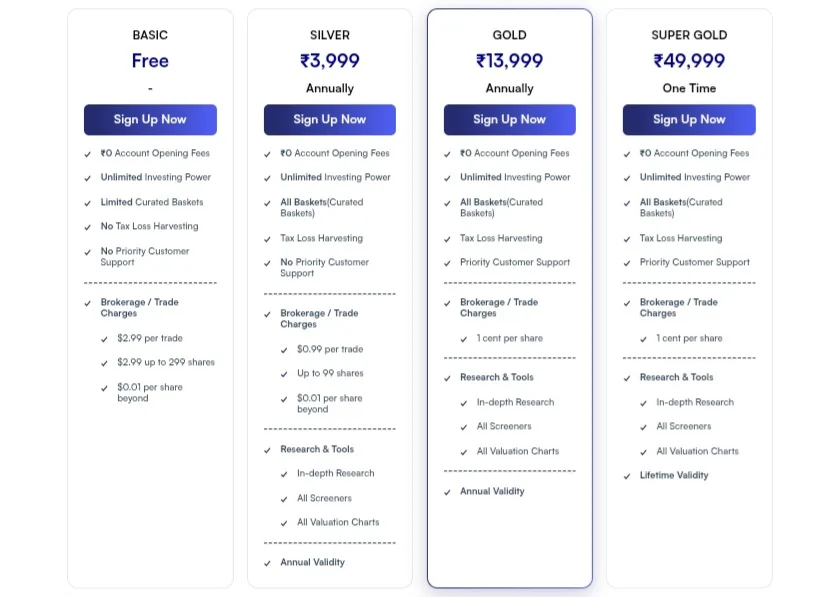
HDFC Sky offers investment services. Confirm whether its currently available products meet your specific US-stock investment requirements.
Official website: https://hdfcsky.com/
Important: Product availability, supported banks, and funding methods can change. Confirm these details directly with the investment platform before opening a bank account specifically for this purpose.
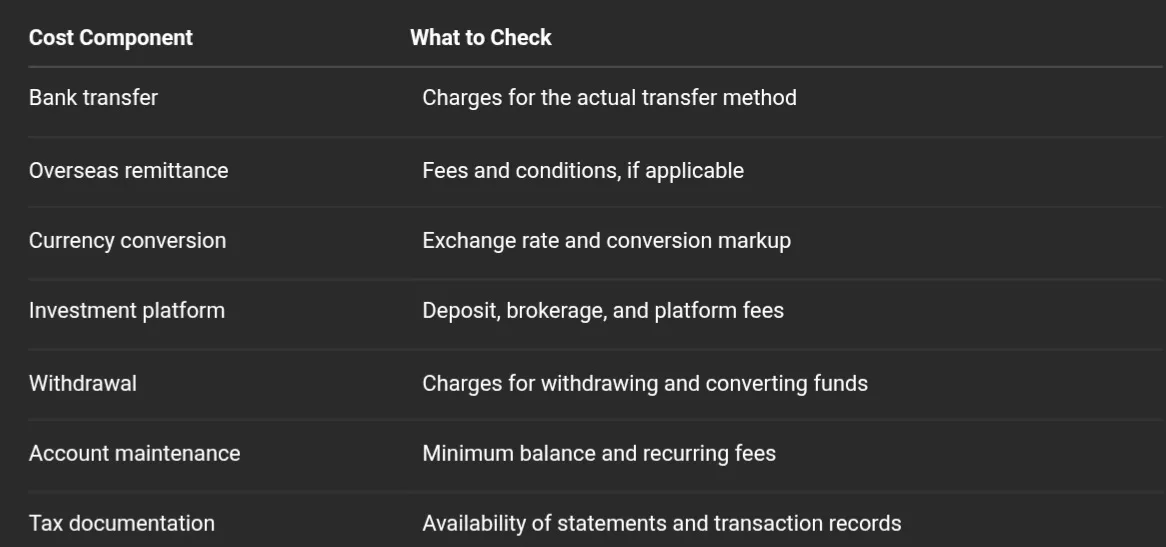
Which Bank Is Best for Funding a US Stock Investment Account?
There is no universally cheapest bank for every US-stock investment platform.
Your total cost can depend on:
- The bank's transfer charges.
- Whether the funding method uses domestic transfers or overseas remittance.
- Currency-conversion costs.
- The investment platform's deposit fees.
- Withdrawal and conversion charges.
- Applicable taxes and statutory charges.
- The bank account's maintenance and debit card fees.
Compare the Total Cost
Important: Domestic Transfers and Overseas Remittances Are Different
Some investment platforms may use a domestic funding arrangement, while others may require an overseas remittance or a different funding method.
These methods can have different costs and regulatory requirements.
Do not assume that an ordinary domestic UPI or bank transfer has the same cost structure as an overseas remittance. Follow the platform's current official funding instructions.
Student tip: If you intend to invest only a small amount, compare the total cost of adding and withdrawing money before making your first investment. A small investment can be disproportionately affected by fixed transaction charges.
How Students Should Choose a Zero-Balance Savings Account
Before opening an account, compare it against your actual needs.
1. Confirm the Minimum Balance Requirement
Look for the exact wording in the bank's official terms.
Check whether the requirement is:
- Zero minimum balance.
- A minimum average monthly balance.
- A minimum average quarterly balance.
- A requirement that applies only to a particular account variant.
2. Check Debit Card Charges
A bank may offer a zero-balance account while charging for the debit card.
Check:
- Issuance fee.
- Annual or renewal fee.
- Replacement card fee.
- ATM transaction limits.
- Charges for transactions beyond free limits.
3. Confirm Online Account Opening
If you want to open an account without visiting a branch, verify that the bank supports online onboarding for your particular circumstances.
You may need:
- PAN.
- Aadhaar or another accepted identity document.
- A mobile number suitable for verification.
- Video KYC or another KYC process.
- Proof of student status, where applicable.
Eligibility and document requirements vary by bank.
4. Review the Mobile Banking Application
For students, a reliable mobile banking app can make everyday banking more convenient.
Check whether the app supports:
- UPI.
- Fund transfers.
- Debit card controls.
- Balance and transaction history.
- Fixed deposits.
- Statements and downloadable documents.
- Service requests and address updates.
5. Check Investment Platform Compatibility
If you intend to invest through INDmoney, Vested, or another investment service, confirm that your bank account is supported.
Do not open an account based solely on an old online article or an outdated supported-bank list.
6. Consider Customer Support
A digital account may be convenient, but problems with KYC, account restrictions, or transaction failures can still occur.
Consider the bank's customer support channels and whether you can visit a branch if necessary.
Common Mistakes Students Should Avoid
Mistake 1: Assuming Every Digital Account Is Zero Balance
Some digital accounts have minimum balance requirements or plan charges. Check the exact product terms.
Mistake 2: Ignoring Debit Card Fees
A debit card's annual fee can make an otherwise attractive account more expensive.
Mistake 3: Opening Multiple Accounts Without a Purpose
Multiple bank accounts can make financial management more complicated. Open an additional account only if it provides a genuine benefit.
Mistake 4: Assuming a Student Account Requires No Documentation
Some student-oriented products require proof of student status, age eligibility, or additional KYC documents.
Mistake 5: Choosing a Bank Only for US Stock Funding
A bank that supports your investment platform may still be expensive because of account fees, transfer costs, or currency conversion.
Compare the total cost before deciding.
Mistake 6: Confusing Zero Balance With a Basic Savings Bank Deposit Account
This article focuses on the specified student-friendly and digital savings products rather than Basic Savings Bank Deposit Accounts (BSBDA).
If a product's zero-balance status or digital availability is unclear, verify its terms directly with the bank.
Frequently Asked Questions (FAQs)
1. Which zero-balance savings account is best for students in India?
The best account depends on eligibility, minimum balance requirements, debit card fees, digital-opening availability, and your banking needs.
IDFC FIRST Bank, Bank of Baroda, Canara Bank, Federal Bank, PNB, AU Small Finance Bank, Kotak Mahindra Bank, and Axis Bank are options worth comparing, subject to the current terms of their respective products.
2. Can students open a savings account online?
Yes, some banks allow eligible students and young adults to open savings accounts online. The available process depends on the bank, account variant, KYC status, and applicant eligibility.
Some student-specific accounts may require a branch visit or additional documentation.
3. Is a zero-balance account completely free?
Not necessarily.
A zero-balance account may still have debit card fees, service charges, transaction limits, or other applicable costs.
Always review the bank's current schedule of charges.
4. Can an MBBS student open a regular savings account?
Generally, an eligible adult MBBS student can apply for a regular savings account, subject to the bank's KYC requirements and eligibility rules.
Whether a student qualifies for a special student account depends on the bank's current terms.
5. Do banks require proof of student status?
Some student-oriented accounts may require proof of enrolment, a valid student ID, or other documents. Regular savings accounts may have different eligibility requirements.
Check the specific bank's application requirements.
6. Which banks should I compare if I invest in US stocks?
You can compare HDFC Bank, IDFC FIRST Bank, ICICI Bank, Axis Bank, and Kotak Mahindra Bank, along with the funding requirements of your chosen investment platform.
The best choice depends on the platform's supported-bank list, transfer method, and applicable fees.
7. Does having an account with a partnered bank guarantee cheaper US-stock deposits?
No.
Partnerships and supported-bank arrangements do not automatically guarantee free or cheaper deposits. The funding method and platform's current terms determine the actual cost.
8. Can I use UPI to fund a US-stock investment account?
That depends on the platform's current funding arrangements. Do not assume that every platform accepts UPI or that a domestic UPI transfer is equivalent to an overseas remittance.
Follow the investment platform's official instructions.
9. Should I open multiple savings accounts to get more benefits?
Only if each account serves a useful purpose.
Maintaining multiple accounts can increase administrative effort and may introduce additional fees or minimum balance obligations.
10. What should I check before applying?
At minimum, verify:
- Minimum balance requirement.
- Account-opening eligibility.
- KYC requirements.
- Debit card charges.
- Annual and service fees.
- Online-opening availability.
- Mobile banking facilities.
- Investment platform compatibility, if relevant.
Final Verdict: Best Zero-Balance Digital Savings Accounts for Students
A student should prioritize low maintenance costs, convenient banking, and straightforward eligibility rather than choosing an account based only on its advertised features.
Here is a practical approach:
- For digital banking: Compare IDFC FIRST Bank, Kotak 811, and eligible AU Bank digital offerings.
- For public-sector banking: Explore Bank of Baroda, Canara Bank, and PNB student-oriented products.
- For youth-focused banking: Check Federal Bank Yuvamitra and PNB RISE eligibility.
- For plan-based digital banking: Review Axis Bank AMAZE's current charges.
- For US-stock investment funding: Compare HDFC Bank, IDFC FIRST Bank, ICICI Bank, Axis Bank, and Kotak Mahindra Bank against your investment platform's current funding requirements.
These are starting points for comparison, not guarantees of eligibility or a definitive ranking by cost. Confirm the current account terms before applying.
Our recommendation: Choose the account that offers the combination of zero minimum balance, low recurring charges, convenient digital banking, and the services you genuinely need.
About Refpo
At Refpo, our goal is to help people discover useful financial products, savings opportunities, and practical ways to manage money.
We publish guides to banking, cashback, referrals, and other personal finance topics to help readers make more informed decisions.
Explore Refpo for more financial guides and money-saving resources.
Disclaimer
This article is for informational and educational purposes only. Account features, fees, eligibility requirements, investment services, and supported funding methods may change.
The information in this article should not be treated as a guarantee that a particular account is currently available, zero balance, free of charges, or eligible for online opening.
Before applying for a savings account or using an investment platform, verify the latest terms directly with the relevant bank or service provider. Investment in overseas securities is subject to applicable Indian laws, regulations, tax requirements, and platform-specific conditions.
Quick Comparison
Quick Comparison Table
Best Zero-Balance Digital Savings Accounts for Students
| Rank | App | Account | Minimum Balance | Student Suitability | Important Considerations |
|---|---|---|---|---|---|
| 1 |  IDFC FIRST Bank IDFC FIRST Bank | Quantum+ Savings Account | 0 | Potentially suitable for eligible applicants | Confirm digital-opening eligibility and account-specific fees |
| 2 |  Bank of Baroda Bank of Baroda | bob BRO Savings Account | 0 | Student-focused option | Check online eligibility, age limits, and applicable charges |
| 3 |  Canara Bank Canara Bank | Eligible student savings account | 0 | Suitable for eligible students | Confirm the exact account variant and online-opening availability |
| 4 |  Federal Bank Federal Bank | Yuvamitra | 0 | Student-focused option | Check age eligibility and the current application process |
| 5 |  Punjab National Bank Punjab National Bank | PNB RISE | 0 | Designed for eligible young customers | Confirm age criteria and digital-opening availability |
| 6 |  AU Small Finance Bank AU Small Finance Bank | AU Digital Savings Account | 0 | Suitable for eligible digital applicants | Check account variant, debit card fees, and onboarding conditions |
| 7 |  Kotak Mahindra Bank Kotak Mahindra Bank | Kotak 811 | 0 | Popular digital-banking option | Check account variant, debit card fees, and onboarding conditions |
| 8 |  Axis Bank Axis Bank | AMAZE Savings Account | 0, but monthly subscription of ₹199 | Suitable for eligible applicants | Plan fees may apply |
| 9 | Axis Bank | Other digital savings variants | Depends on the selected variant | Depends on eligibility | Check monthly balance requirements and service charges |
This is a practical shortlist rather than a guarantee that every account is currently available to every student or can be opened entirely online. Verify the exact product's current schedule of charges and eligibility requirements.
Community Comments
Comments (0)
Add Comment
800 characters left
Loading comments...
Previous Post
Top Invite-Only Credit Cards in India (2026): Benefits, Fees & How to Get Invited
Next Post
Best Zero Balance Savings Accounts in Top Private Banks in India (2026)
Related
More Refpo reads

Top Invite-Only Credit Cards in India (2026): Benefits, Fees & How to Get Invited
Discover the top invite-only credit cards in India for 2026, featuring premium options like HDFC Infinia and ICICI Emeralde Private Metal. Explore their exclusive benefits, fees, rewards, eligibility criteria, and practical tips to improve your chances of receiving an invitation.
Best Zero Balance Savings Accounts in Top Private Banks in India (2026)
Looking for the best zero-balance savings account in India? Compare Kotak 811, IDFC FIRST Quantum+, Axis AMAZE, AU Small Finance Bank, ICICI Bank, and HDFC Bank based on features, charges, and benefits.
Best Credit Card Offers for Diwali Shopping 2026: Amazon, Flipkart & More
Looking for the best credit card offers for Diwali Shopping 2026? Compare Amazon, Flipkart, SBI, Axis, ICICI and other festive credit card discounts, cashback and rewards.
People Also Looking For
Best Zero-Balance Digital Savings Accounts for Students in India (2026) / Best Zero Balance Savings Accounts in Top Private Banks in India (2026) / Top Invite-Only Credit Cards in India (2026): Benefits, Fees & How to Get Invited / How to Become a Self-Taught Millionaire Legitimately — Using Just Your PC and the Internet / Best Credit Card Offers for Diwali Shopping 2026: Amazon, Flipkart & More / Best Cashback Apps for Credit Card Users in India 2026 / Best Referral Apps for College Students in India (2026) / How to Earn Small Side Income Using Referral Apps
More Ways to Earn Money Online
Step-by-Step Upstox Account Opening With Referral Code (2026 Guide) / Amazon Pay Referral Reward Not Credited? Fixes Explained (2026 Guide) / Best FD Backed Credit Cards Without Income Proof in India (2026) / BHIM Referral Code Not Working? Fixes Explained / IDFC FIRST Bank Refer and Earn / Airtel Payments Bank Refer and Earn / Win money Refer and Earn / Airtel Refer and Earn